

Introduction
Chronic skin issues such as long-term inflammatory skin conditions often flare without warning.
One day your skin feels calm, the next it’s red, dry, or itchy again.
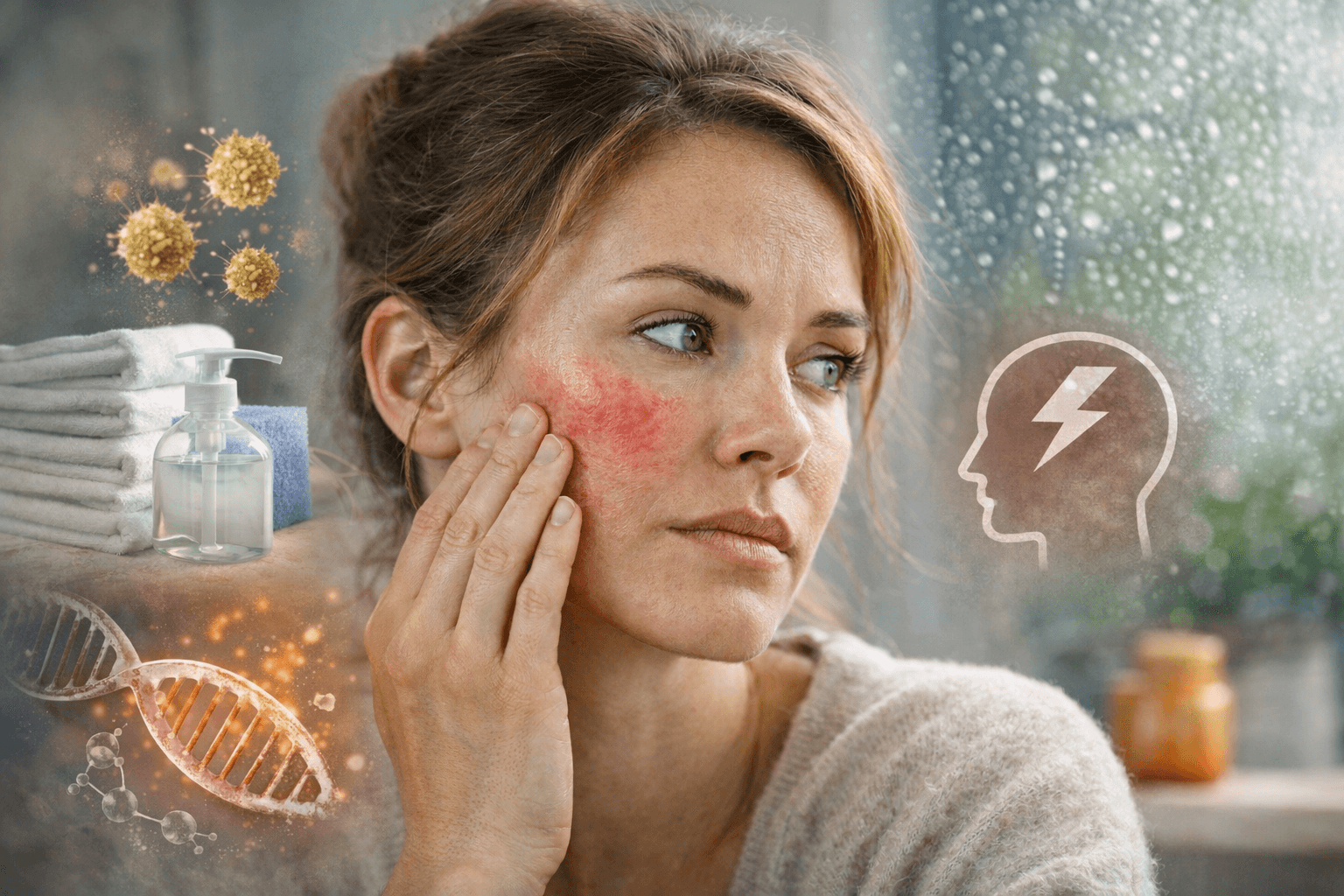
These swings are more than surface-deep; they reflect how the skin and immune system react to stress, environment, and genetics.
When Skin Feels Unpredictable
“My skin can look normal in the morning, and by evening it’s burning.”
That sense of unpredictability is common.
Flare-ups can appear suddenly after stress, a new product, or even a change in weather.
This uncertainty affects both comfort and confidence, making chronic skin disease emotionally as well as physically challenging.
What Are Chronic Skin Conditions?
Chronic skin diseases are long-term inflammatory conditions that move through quiet and active phases.
They result from a mix of genetic, immune, and environmental factors.
Genetic Factors
Variations in the filaggrin (FLG) gene can weaken the skin barrier, allowing moisture to escape and irritants to enter.
Immune Response
An overactive immune system releases inflammatory signals even when there’s no infection.
Environmental Influences
Everyday exposures, soaps, detergents, dust, pollen, stress, and weather changes — can push the skin past its threshold.
The result is inflammation that settles and flares again, often without an obvious pattern.
Why Skin Flares Up
Think of the skin as a wall protecting the body.
When that wall weakens, irritants sneak through.
The immune system reacts, sending inflammatory chemicals to the surface.
The redness, itch, and dryness that follow are the visible signs of this overreaction.
Once the barrier is damaged, it becomes easier for the next flare to start — a cycle of irritation and repair that repeats until the barrier is rebuilt.
Common Triggers for Skin Flare-Ups
• Stress: Raises cortisol and delays repair.
• Irritants and allergens: Fragrances, detergents, dust, pollen, and soaps weaken the outer layer.
• Climate: Sudden temperature or humidity changes dry out the skin.
• Nutrient deficiencies: Low vitamin D, zinc, or iron slow healing.
• Hormonal shifts: Pregnancy, menopause, and menstruation affect immune balance.
• Infections: Divert immune focus away from the skin, allowing irritation to worsen.
Most flares come from a mix of triggers rather than one single cause.
The Role of Immunity and Genetics
Some people inherit a more sensitive skin barrier or a stronger inflammatory response.
These traits don’t guarantee disease, but they make the skin less resilient.
When combined with external stressors, flare-ups are more likely — and often more intense.
Emotional Impact of Unpredictable Skin
Sudden flares can feel discouraging.
Redness, itching, or visible patches often affect self-esteem and sleep.
Stress caused by these changes can, in turn, worsen inflammation.
Psychological support, stress-reduction techniques, and patient education all help break this cycle.
Managing Chronic Skin Conditions
Managing flare-ups isn’t about quick fixes; it’s about keeping the skin and immune system balanced
1. Strengthen the Barrier
Daily use of fragrance-free emollients and gentle cleansers maintains hydration and protection. In some cases, clinic-based options such as LED light therapy to support skin recovery may also help calm inflammation and support barrier repair.
2. Identify and Reduce Triggers
Keep a simple symptom diary to notice links between lifestyle, weather, and flare frequency.
3. Support the Body
Balanced diet, adequate hydration, and regular sleep help regulate inflammation.
4. Medical and Integrated Care
Blood tests for vitamin D, iron, and zinc identify deficiencies.
Combining dermatology, nutrition, and mental-health input achieves longer-term stability.
Key Takeaway
Flare-ups may seem random, but they follow a pattern.
When the skin barrier weakens and the immune system overreacts, inflammation returns.
Repairing the barrier and calming the immune system are the foundations of long-term control.
Final Thought
Living with a chronic skin condition means learning your skin’s rhythm.
With steady care, flares become less frequent, and recovery is faster.
The goal isn’t perfect skin every day — it’s skin that feels comfortable and predictable most of the time.