Pigmentation and uneven skin tone
Whether it is patches, spots or scars, if the colour will not fade we find out why. You have tried brightening creams, peels and facials. Maybe you were told it was sun damage, or acne marks, or hormones. Whatever you tried, it either did not work or it made things worse.
What it treats
Why most pigment treatment fails
Dark marks, patches and uneven tone do not respond well to aggressive treatment, especially in skin of colour. Pigment is your skin protecting itself. The harder you push it, the harder it pushes back.
- Peels that were too strong for the skin at that moment.
- Laser done too soon, before inflammation had settled.
- Over-the-counter lightening products.
- The wrong facials or active ingredients.
We see patients who have been made worse by all four. So we do not just treat what we see. We diagnose what is underneath it.
Pigment needs diagnosis, not just treatment
Before we touch pigment we ask one question. Is your skin ready to let it go?
- Is the barrier strong enough to tolerate treatment?
- Is the pigment deep or surface level?
- Is there inflammation or trauma underneath it?
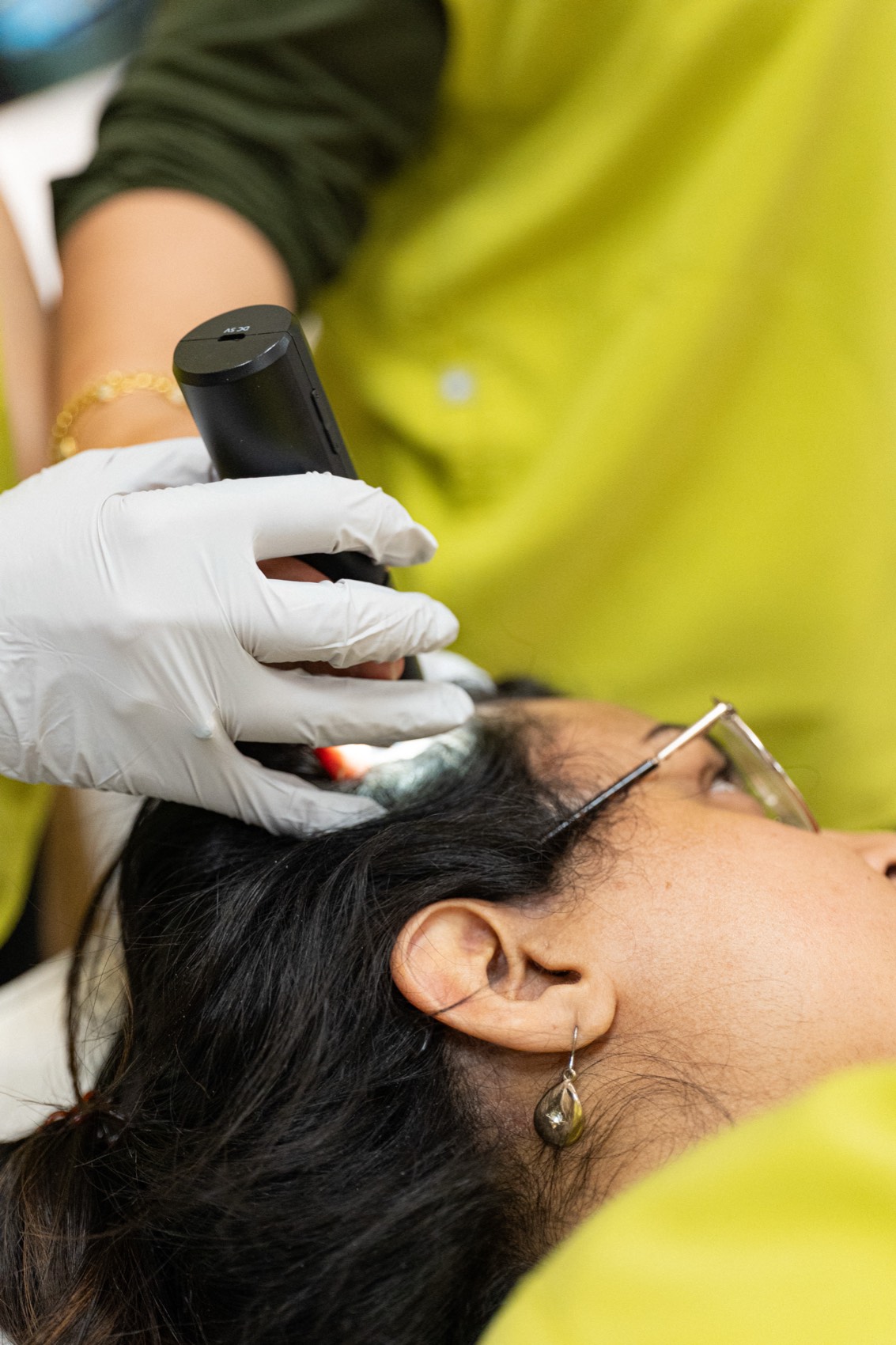
We use Vectra 3D and Observ scans to map pigment depth, hydration and blood flow, take a full skin history to find what triggered the change, and use imaging to monitor safe, steady progress.
Our three-phase protocol
Pigmentation does not need to be attacked. It needs to be released, in the right order.
- Calm and repair first: electroporation with anti-inflammatory ingredients, exosome therapy, LED for healing, and a simplified pigment-safe routine.
- Then guide the pigment out: enzyme-based brightening, pigment modulators topical or internal, low-heat treatments if suitable, and hormonal or lifestyle support where needed.
- Then keep it away: UV and heat protection planning, hormonal mapping if relevant, gentle resurfacing only when the skin is ready, and ongoing barrier support.
Pigment usually returns when the root cause is ignored. That is what the third phase is for.
Skin of colour
Deeper skin tones need a different approach, not a cautious version of the same one.
- The risk of post-inflammatory pigmentation is higher, so intensity and spacing matter more.
- Treatments that are routine on lighter skin can trigger months of pigment on deeper skin.
- Rosacea and inflammation are frequently missed, and treated as acne instead.
- We assess before every session rather than working to a fixed course.
Your skin is not broken. It is protecting you, and pigment is how it does that. We work with that rather than fighting it, which is what reduces relapse.
Before & after
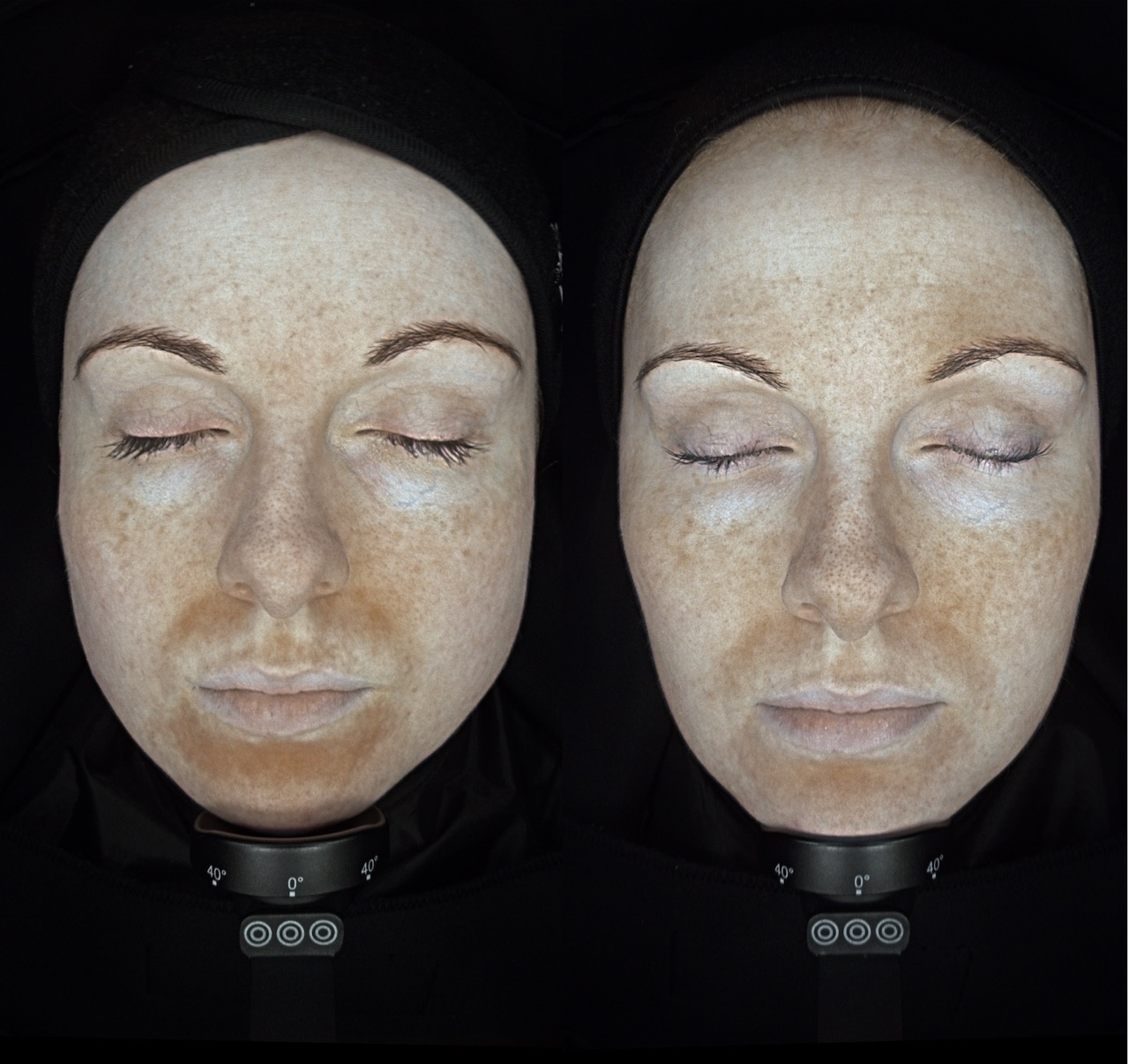
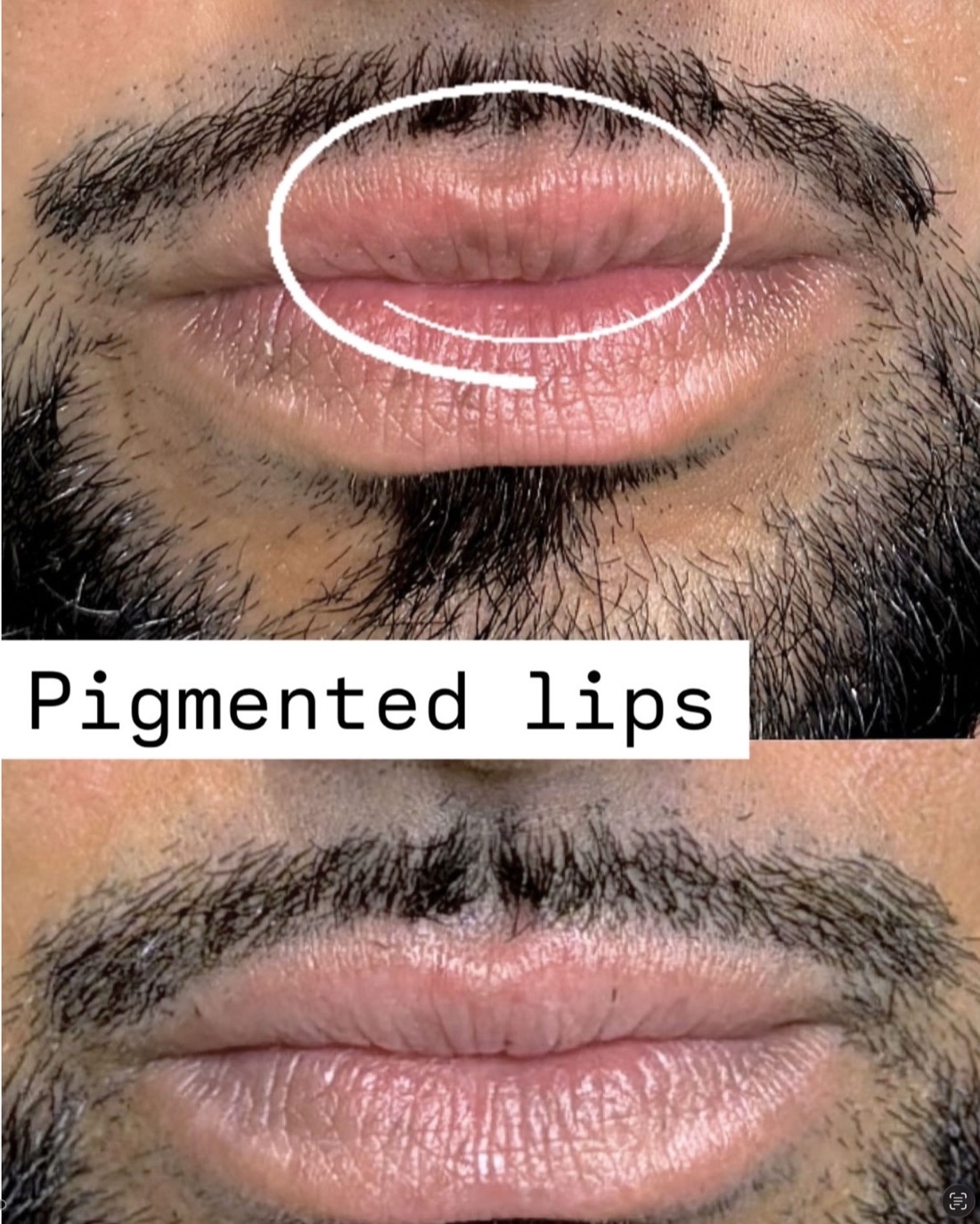
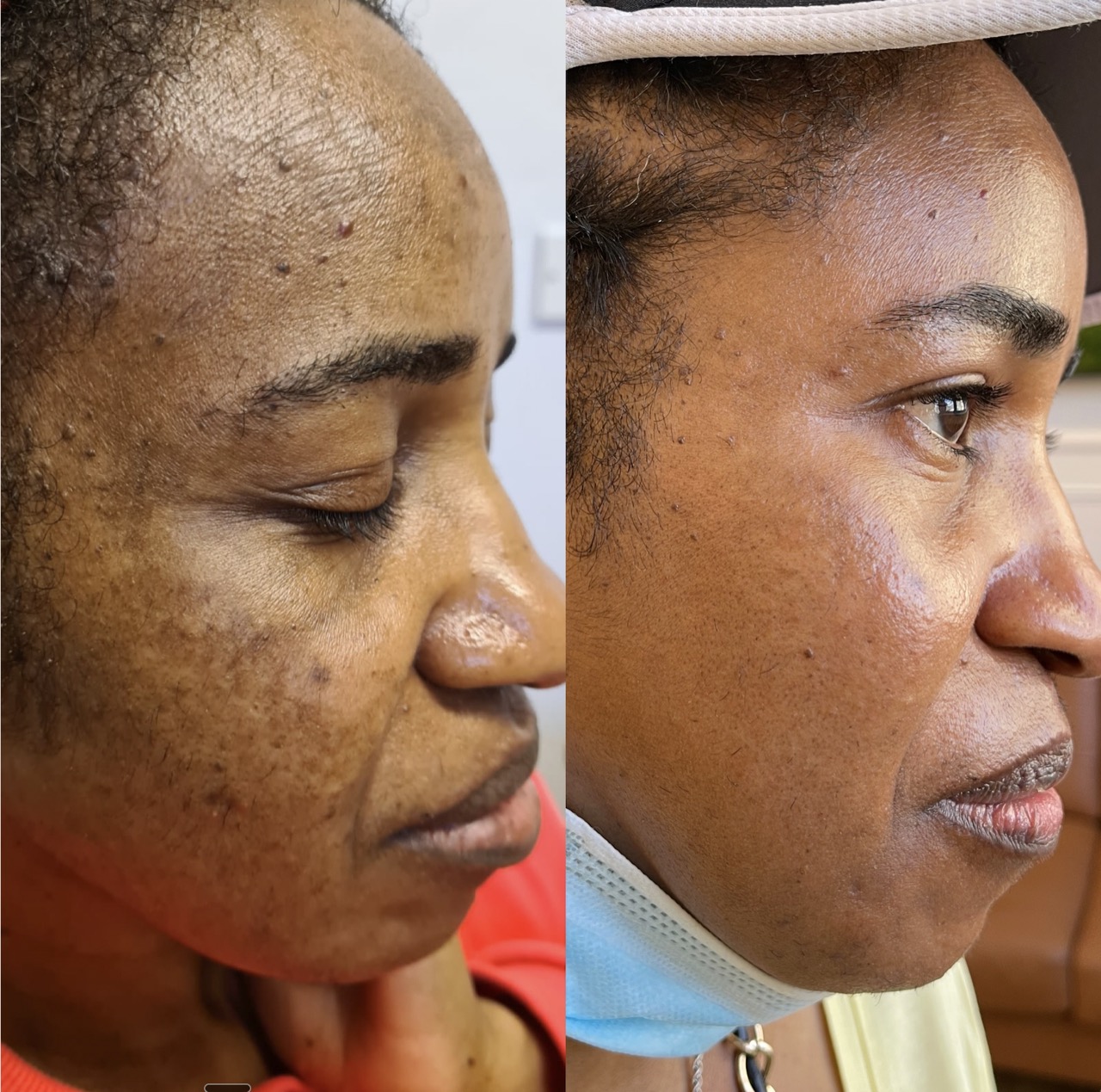
Real Harmony Medical patients, shared with consent. Individual results vary.
Questions, answered
Usually because it was done while the skin was still inflamed, or it was too strong for the skin at that point. Inflammation and pigment feed each other, so treating on top of active inflammation commonly produces more pigment, not less.
Some lasers are, at the right settings, at the right time, and only once inflammation is settled. Others are not appropriate at all. That decision comes from the scan, not from the treatment menu.
Honestly, no. It is manageable, often very well, but it is a condition that recurs with sun, heat and hormonal change. Anyone promising a permanent fix is overselling. What we can do is clear it and then keep it quiet.
Surface pigment can shift within weeks. Deeper pigment takes months, and the calm and repair phase comes first. We photograph in the same conditions each visit, because slow fading is very hard to judge in a mirror.
It can, particularly melasma, which is why the third phase of the plan exists. Sun and heat protection, and treating the driver rather than only the colour, is what reduces how often it returns.