Eczema-prone and barrier-damaged skin
We want to be straight with you before you read any further. We do not treat or cure eczema. Atopic dermatitis is a medical condition, and it belongs with your GP or a dermatologist. What we can do is assess your skin, work out whether eczema is actually what is happening, repair the barrier underneath it, and help your skin hold up better between flares.
What it treats
What we can help with, and what we cannot
This matters more than anything else on the page, so it goes first.
- We can assess your skin properly and tell you what we actually see.
- We can tell eczema apart from other causes of redness, which are regularly confused.
- We can measure how much water your skin is losing and work on the barrier.
- We can identify products and routines making it worse.
- We cannot cure eczema. Nobody can.
- We do not prescribe steroid creams or immunosuppressants for it. That is your GP or a dermatologist.
- We will not treat you mid-flare if treatment would make it worse.
If what you need is medical management of the condition, we will say so and tell you to go back to your GP and ask for a dermatology referral. We would rather do that than take your money.
Why the barrier is the whole problem
Eczema-prone skin has a barrier that does not hold water in or keep irritants out. That one fact explains most of what you experience.
- Water escapes through the skin faster than it should, so it is persistently dry.
- Irritants get in more easily, so more things trigger a reaction.
- The immune system stays on alert, which keeps the skin inflamed.
- Inflammation damages the barrier further, so the cycle continues.
This is why cream alone often does not hold. Moisturiser sits on the surface. If the barrier itself is not rebuilt, the skin returns to leaking as soon as you stop.
How we assess it
You are not getting a treatment plan from a photograph or a glance across a room.
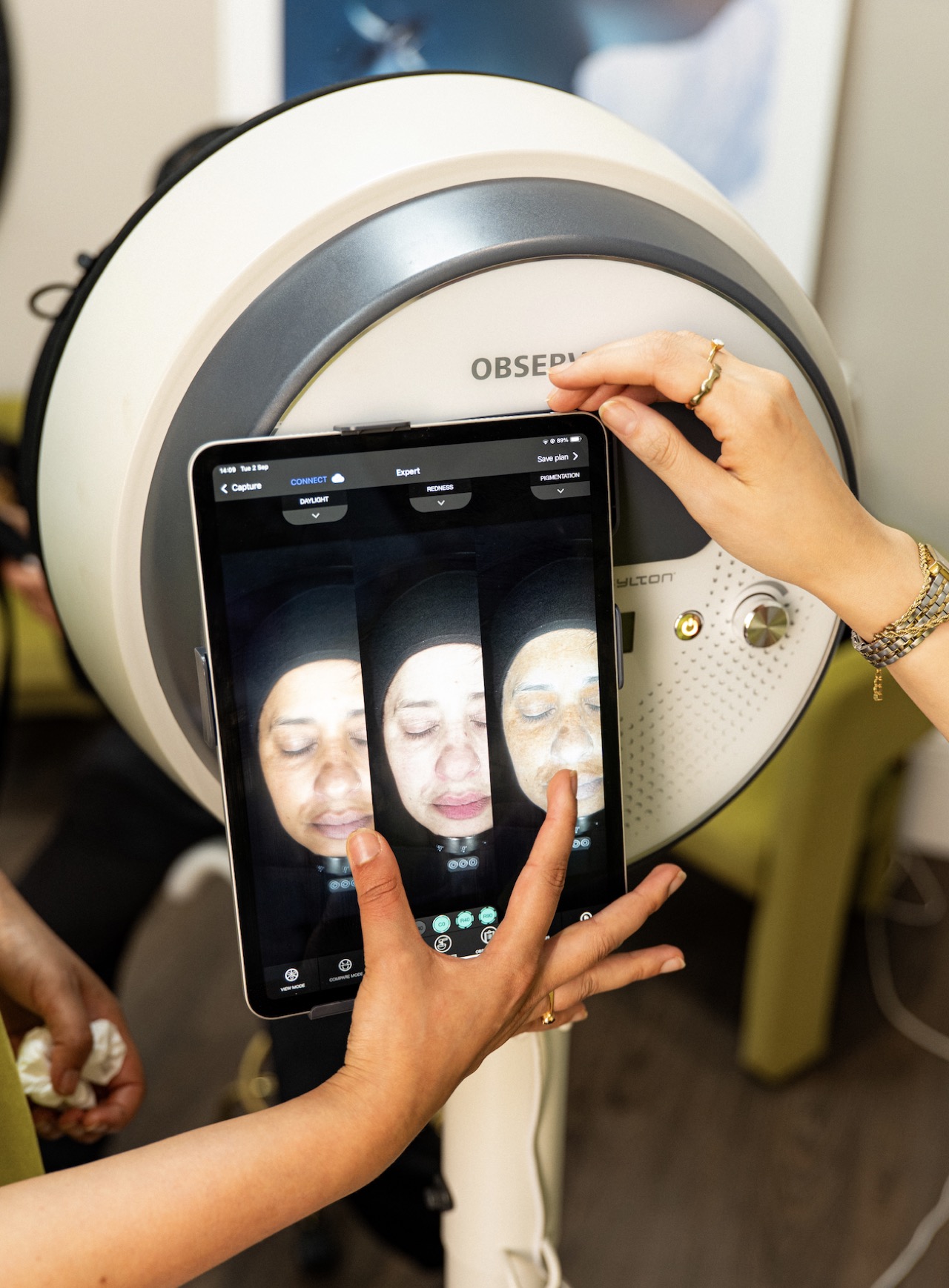
- Observ imaging under several light modes, which separates inflammatory redness from vascular redness and from pigment.
- Measurement of how much water your skin is losing, which is a direct read on barrier strength.
- Vectra 3D imaging, to record where and how the skin is affected over time.
- A full history of what you have used, what stung, and what changed.
This is also how we find the cases that were never eczema. Seborrhoeic dermatitis, contact reactions and rosacea all get treated as eczema, and each needs something different.
What we do between flares
The useful window is when your skin is calm, not when it is angry. That is when the barrier can actually be rebuilt.
- Barrier repair using electroporation, which delivers ingredients without friction or needles.
- Medical-grade LED, to reduce low-level inflammation.
- A stripped-back routine, so we remove what is irritating you rather than adding more.
- Regular remeasurement, so improvement is something we can show you rather than guess at.
The realistic aim is a barrier that holds better, so flares are less frequent and less severe, and your skin tolerates more. That is worth having. It is not the same as a cure, and we will not pretend otherwise.
Questions, answered
No, and neither can anyone else. Eczema is a long-term condition that flares and settles. What can change is how strong your barrier is between flares, which affects how often you flare and how badly. We would rather tell you that than sell you a cure.
Not for eczema. Prescription management of the condition sits with your GP or a dermatologist. Our work is on the barrier and on identifying what is irritating your skin, which is a different job and sits alongside theirs.
That is one of the more useful things we can answer. Seborrhoeic dermatitis, contact reactions, rosacea and simple barrier damage from over-treatment all get labelled as eczema. Our imaging separates them, and getting it wrong means years of the wrong treatment.
Book the assessment, yes. We may well decide not to treat you that day, because working on inflamed skin usually sets it back. We will assess you, tell you what we see, and agree when to start.
No. We do not interfere with treatment your GP or dermatologist has prescribed. If we think something in your routine is a problem we will say so and suggest you raise it with them.
We do not treat children for this. Childhood eczema belongs with your GP or a paediatric dermatology service.